
SummerCMS
A new dawn in content management
A content management framework for Go, inspired by WinterCMS. Plugins, the admin SPA and console commands compile into a single binary.
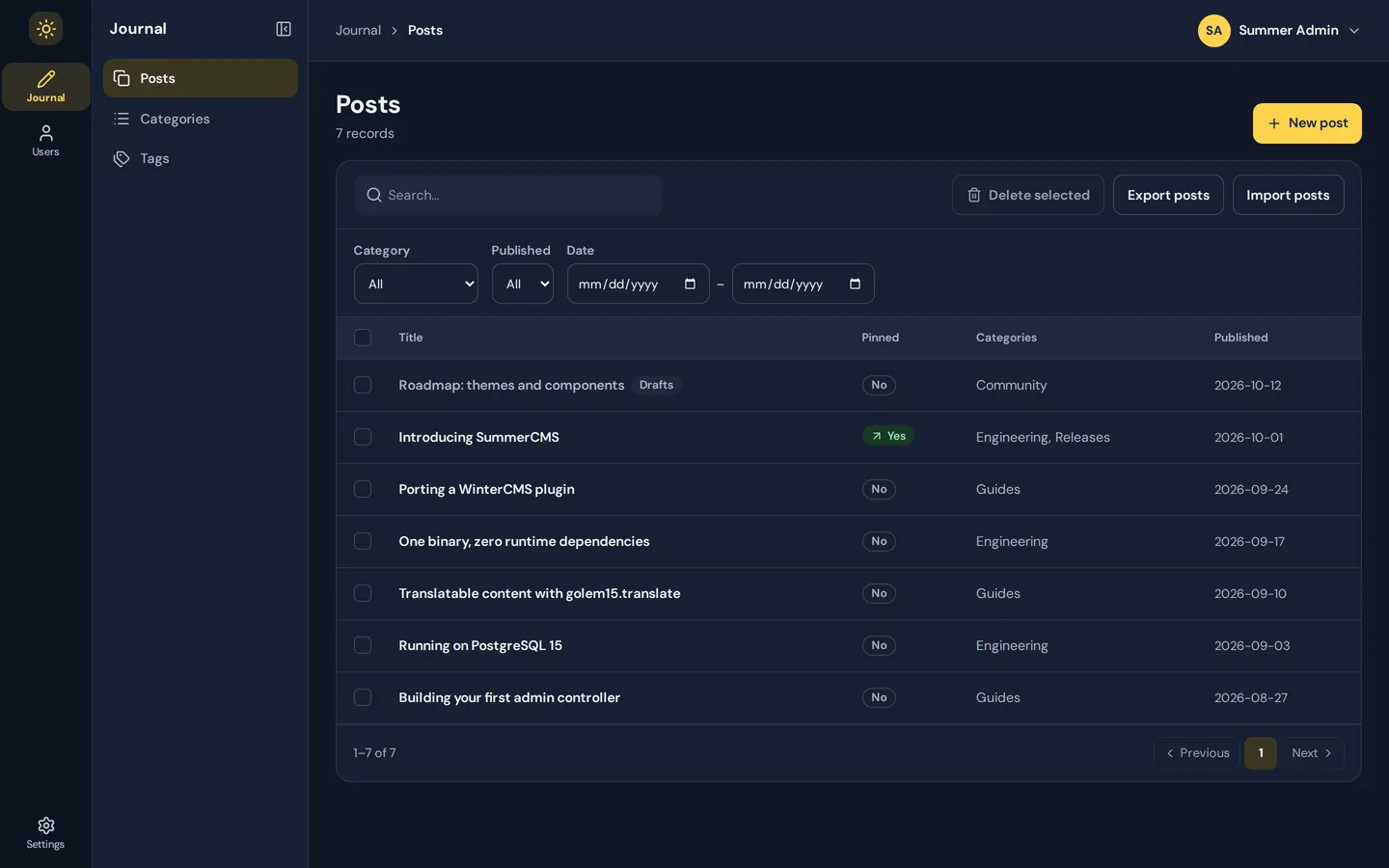
A content framework, built the Go way.
One binary
Plugins are Go packages, compiled in and type-checked at build time. You deploy one binary.
YAML-driven admin
Describe lists and forms in fields.yaml and columns.yaml. An embedded SPA renders them.
Headless by design
A JSON API declared route by route, plus realtime channels. Build the public site in whatever frontend you like.
Describe it in YAML. Get this.
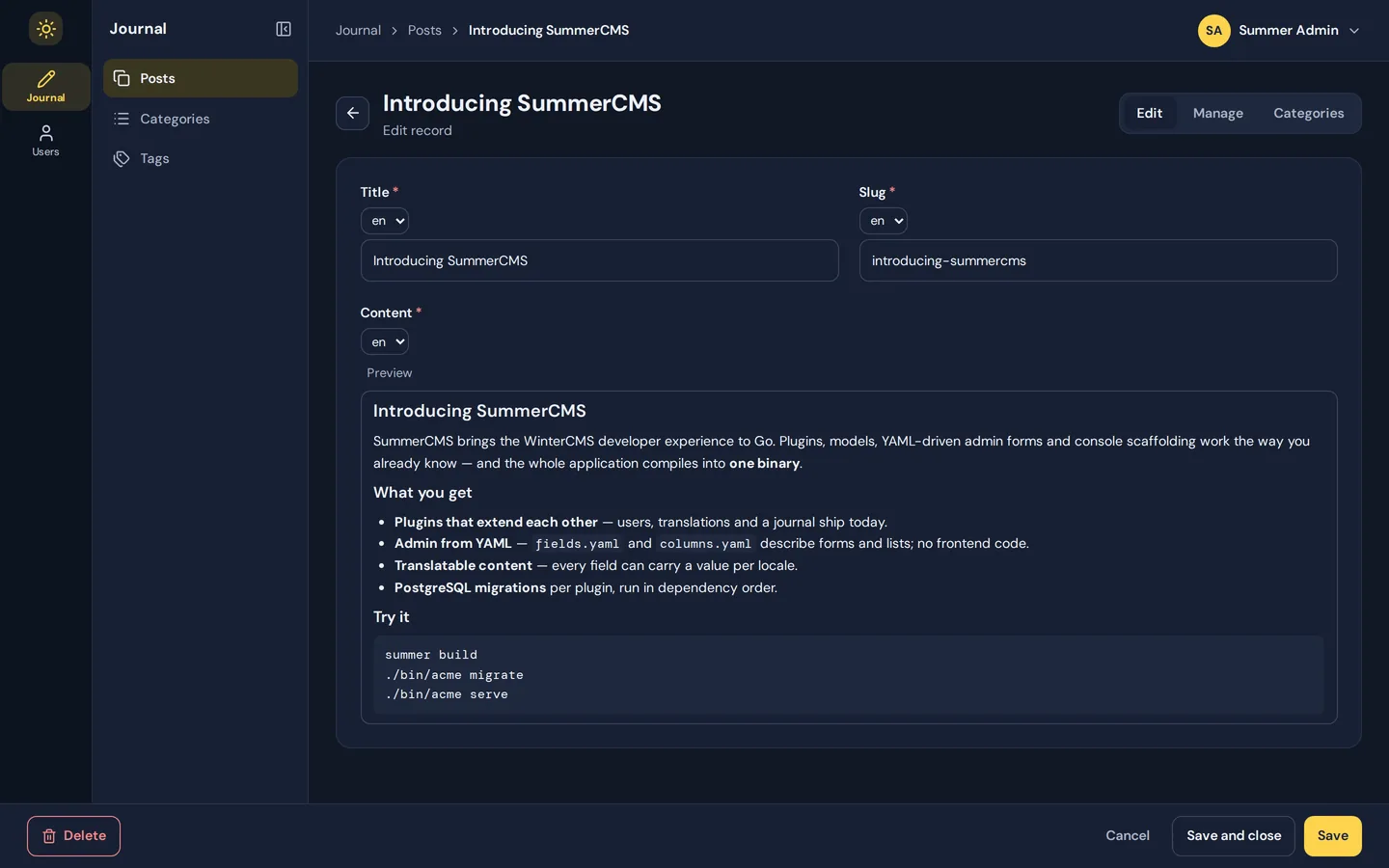
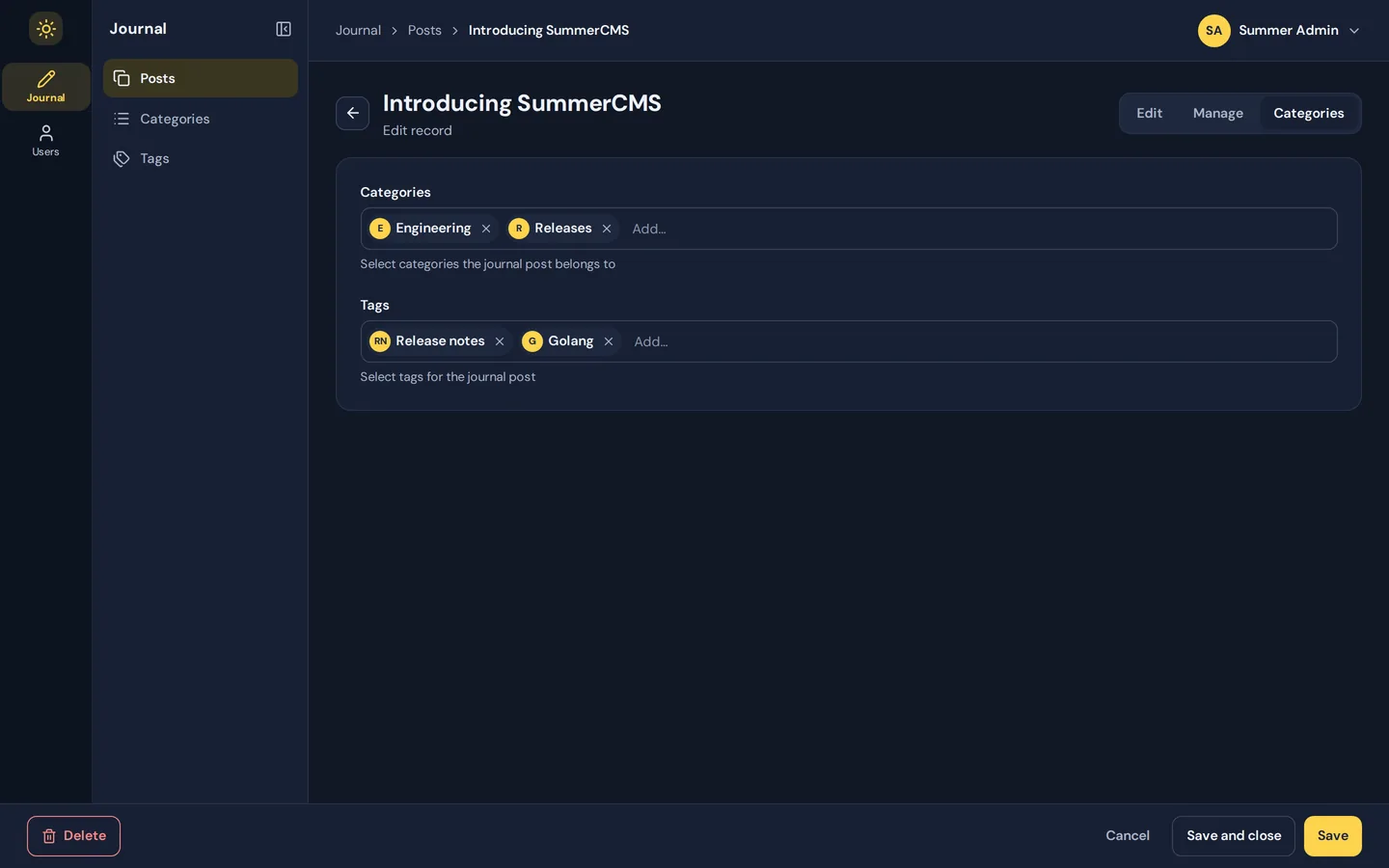
Every screen below comes from the Journal plugin’s fields.yaml. Field types, tabs, spans and relations are compiled at boot, and the embedded admin renders them. No frontend code.
title:
    type: mltext
    span: left
    required: true
slug:
    type: mltext
    span: right
    preset:
        field: title
        type: slug
content:
    type: mlmarkdown
    size: huge
Translatable title, slug preset and a Markdown editor with preview.
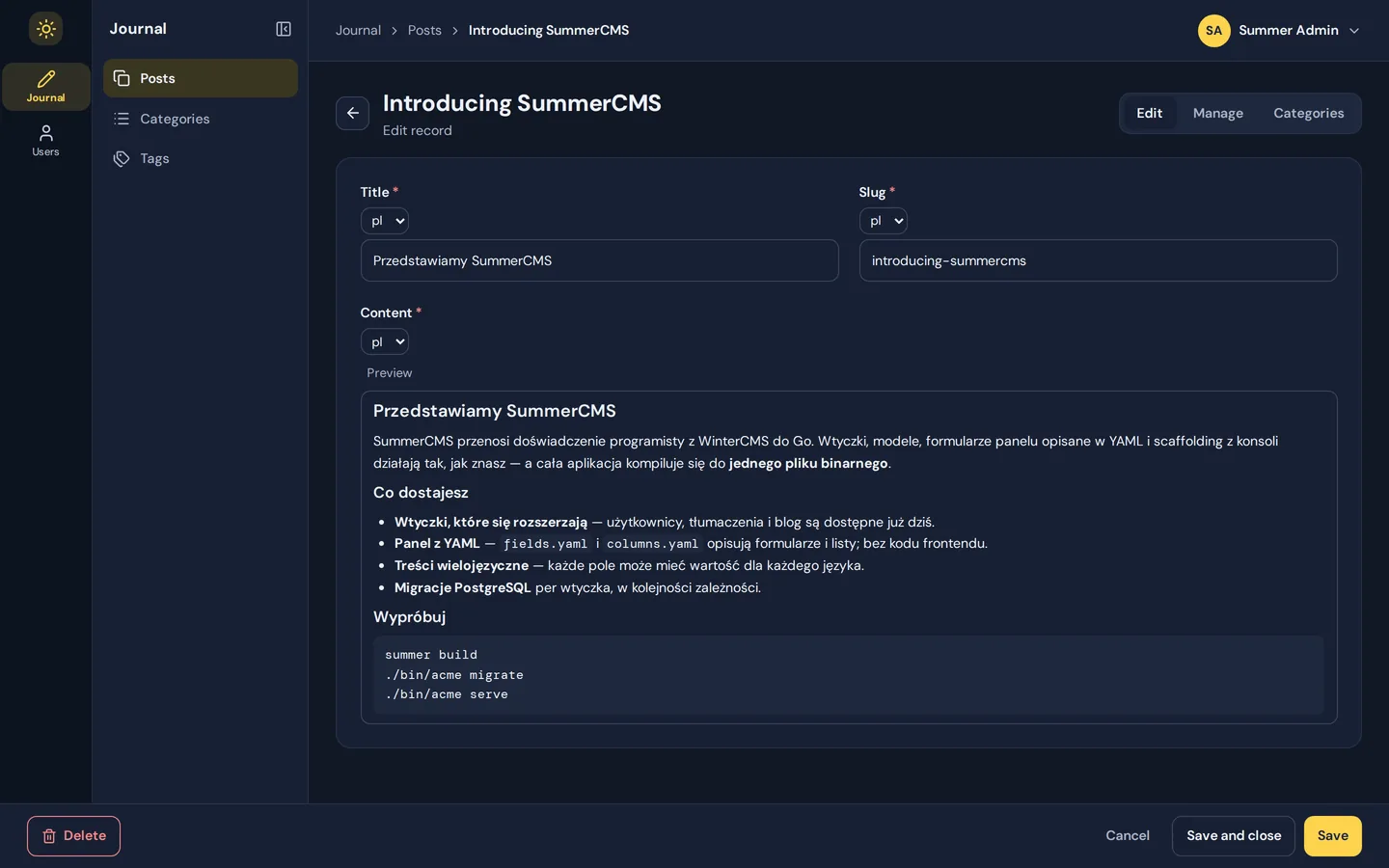
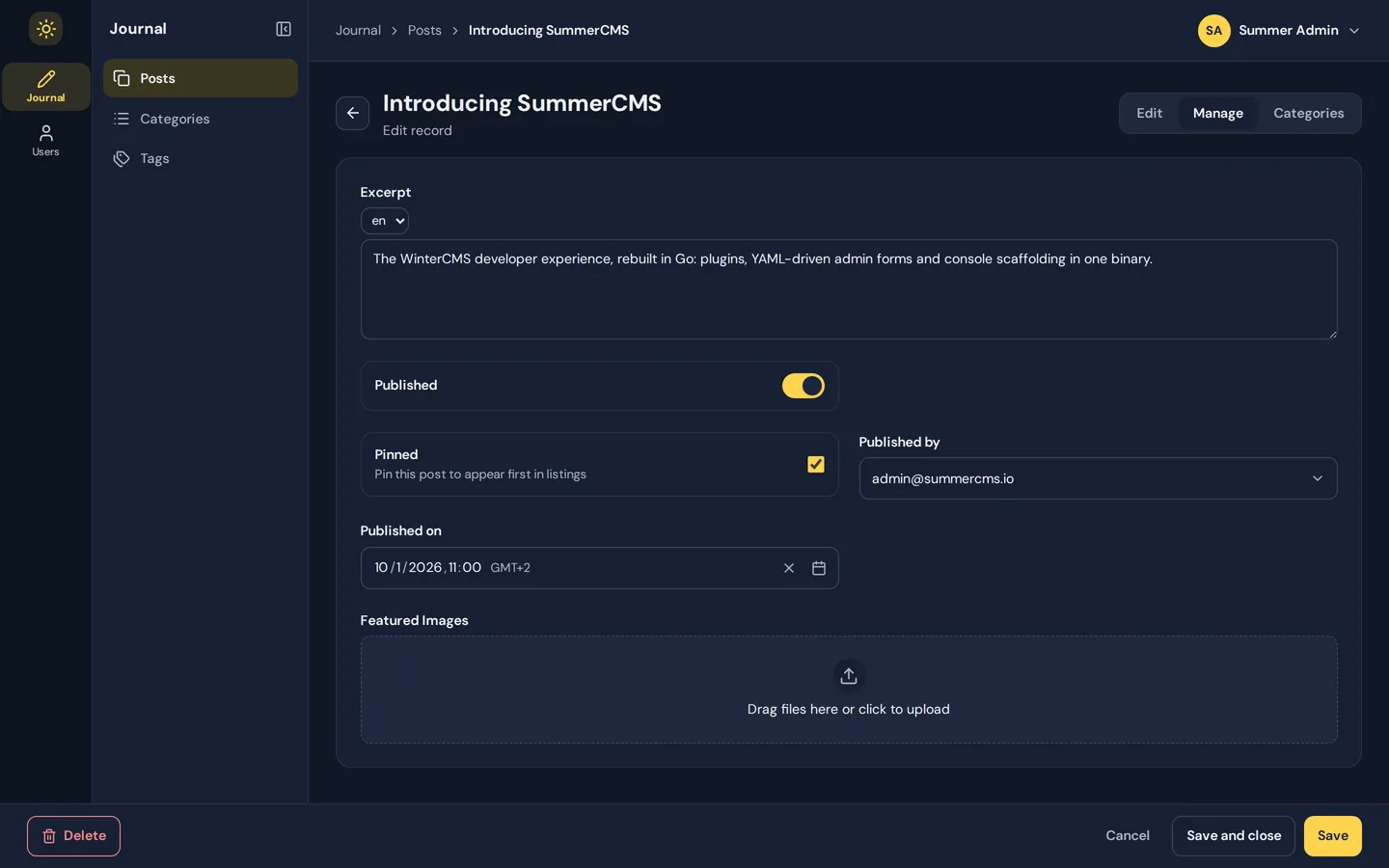
The services a content app needs.
The same ideas, in Go.
Plugins still register and boot, require each other, ship migrations and admin YAML. If you know WinterCMS, you'll feel at home.
See the full concept map →SummerCMS owes its design to WinterCMS. If you're happy on PHP, WinterCMS is a great home. Thank you to the Winter team and community. Visit wintercms.com
PHP served us well. Running it at scale didn’t.
We built client projects on OctoberCMS and WinterCMS for years, and the plugins we still rely on started there. What wore us down wasn’t the framework. It was keeping it fast in production.
Workers that eat the server
Every PHP request takes a whole worker that boots the app from scratch. Under traffic the worker pool grows until it takes over the machine’s memory and CPU.
Scaling out wasn’t enough
Adding servers moved the problem without solving it. Busy sites still needed load balancing and careful tuning of how many workers each server runs.
Caching as a survival strategy
To serve traffic safely we leaned on Redis and other caching layers, which means more services to run, more invalidation bugs and more to monitor.
One process, always warm
A SummerCMS app is one long-running Go process. Concurrent requests are cheap goroutines, and config, routes and the compiled admin YAML stay in memory. You add a cache when you need one, not to keep the site standing.
If PHP works for you, WinterCMS is still a great home, and if you know it, you already know most of SummerCMS.
Build your first app.
Alpha 0.2 is for early adopters. APIs may change before 1.0.